
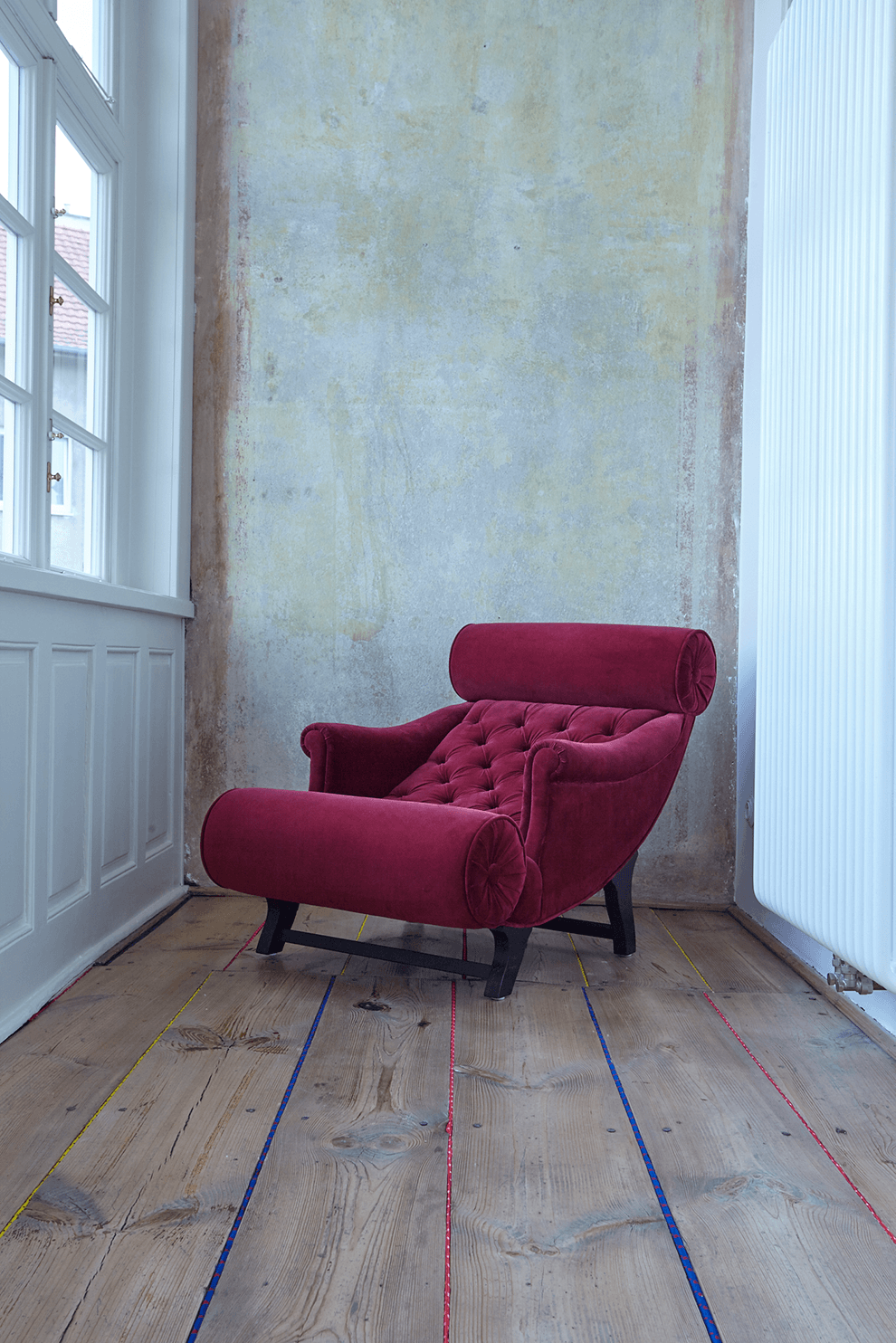
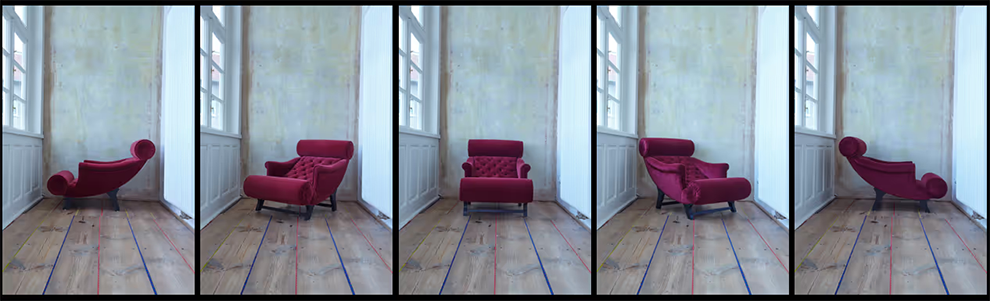
Footstool for the Loos chaise longue
Product detailed description
Indicative price for the made-to-order product
Square base: from 25 900 Kč + the price of 1.5 linear meters of upholstery fabric in a width of 140 cm
Round base: from 26 900 Kč + the price of 1.5 linear meters of upholstery fabric in a width of 140 cm
For a surcharge of 2.000,- Kč we can make the base in oak.
Discussion
Be the first who will post an article to this item!
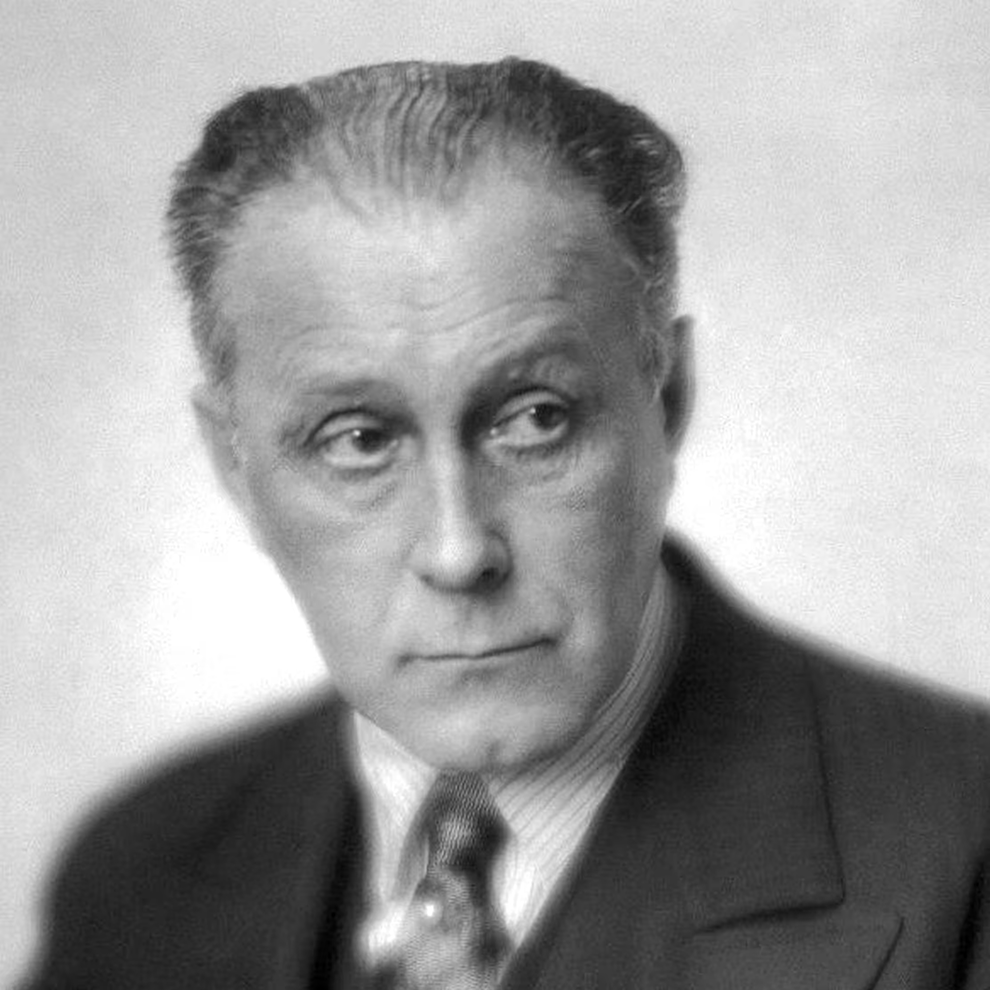
A pioneer of modern architecture, a theorist, an interior designer, and a revolutionary architect—this is Adolf Loos. Concepts such as "Ornament is a Crime," *Spoken into the Void*, the "House without Eyebrows," and the *Raumplan* are all synonymous with his name. He designed his buildings from the inside out, thinking in three dimensions—using cubic volumes as the building blocks for both his structures and his interiors. He fully realized his unique spatial concept in the design of the Müller Villa in the Ořechovka district of Prague.
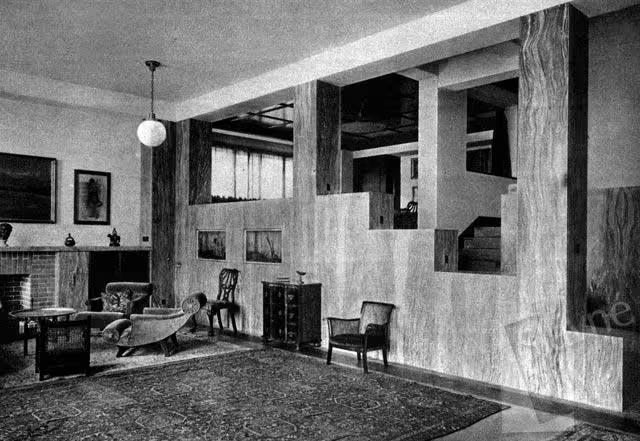
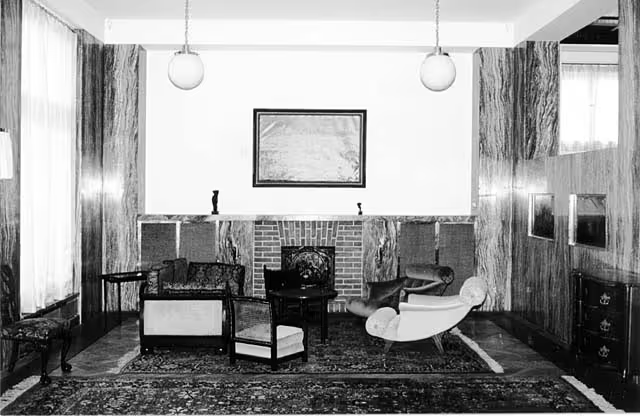
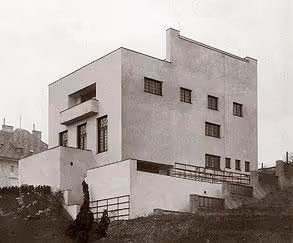
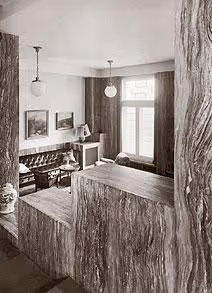
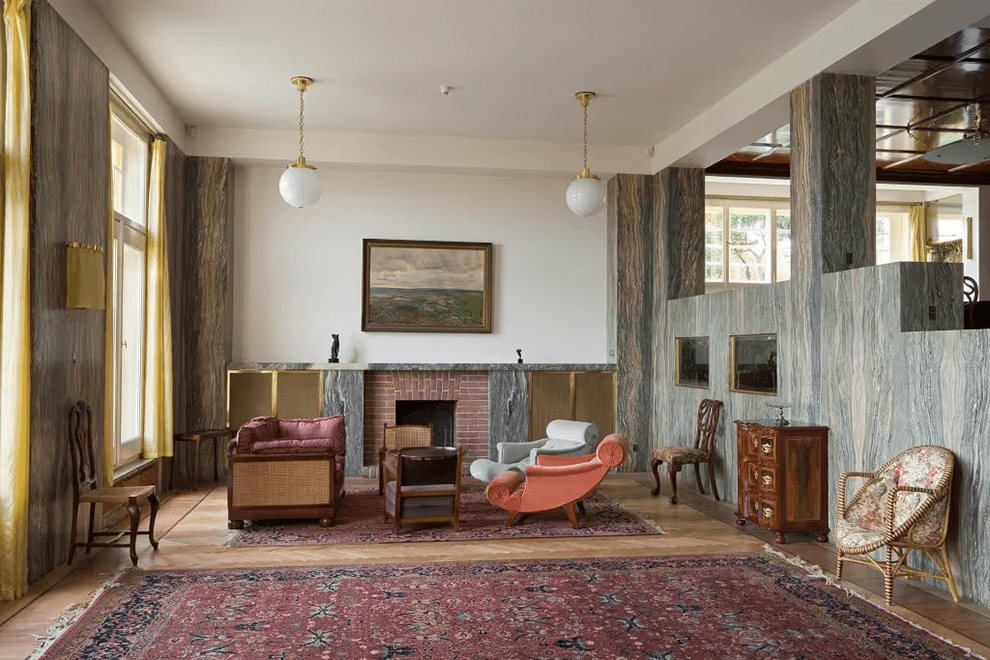
"Ornament is a crime"—this is perhaps the most frequently cited statement by this prominent architect, who was also one of the most vocal advocates for simplicity and functionality in architecture. Loos’s radical rejection of ornament, combined with his emphasis on the economic aspects of construction, proved instrumental in the birth of modern architecture, establishing him as a key figure who anticipated its emergence. Yet, somewhat paradoxically, the austere forms of Loos’s architecture often housed traditionally furnished rooms, complete with Persian rugs, decorative furniture, and luxurious wall coverings featuring intricate inlays or stone cladding. This is precisely the case with the interior of the Müller Villa in Prague, created by Loos in 1930. It represents the most rigorous application of his *Raumplan*—a spatial concept based on the fluid continuity and interconnection of the various parts of a home, where the height of each room is determined by its specific function. Loos devoted far more attention to the nature of urban living and its culture than many of his contemporaries. He placed great emphasis on privacy and intimacy, as these qualities were intended to help modern individuals compensate for the bustle of a vibrant metropolis. Loos traveled extensively throughout Europe, spoke several languages, and led a refined lifestyle—factors that made him a respected and sought-after authority among his clients. Adolf Loos was also a highly active and significant theorist, authoring numerous texts and essays in which he critically rejected all forms of decoration and anything that hindered the functionality of architecture, applied arts, and design. In his essay "Architecture," he explains the distinction between art and architecture; in his view, architecture does not belong to the realm of art, because a work of art is meant to jolt people out of their comfort, whereas a house is intended to serve that very comfort. The only exceptions for Loos were tombstones and monuments. It is worth noting that Loos’s father—a stonemason and sculptor based in Brno—specialized primarily in funerary sculpture and sepulchral architecture, an influence that likely left a deep impression on the young Loos. The Goldman & Salatsch building—a commercial and residential project and one of Loos’s magnificent works in the heart of Vienna—occupies a prominent site on Michaelerplatz, directly opposite the Neo-Baroque section of the Imperial Hofburg. Due to its bold façade, stripped of all ornamentation and classical architectural elements, the building earned the nickname "the house without eyebrows." The building drew intense public criticism and was described in the press as an affront to Vienna. Today, however, the Loos House—built in 1911 and known to the Viennese as the *Looshaus*—stands as a landmark in the evolution of architecture and a cornerstone of the emerging Modernist movement. Other projects through which Loos secured his place in architectural history are those in which he fully developed the concept of the *Raumplan* (spatial plan). In addition to the Müller Villa in Prague, he applied this unique spatial principle to the home of the avant-garde poet Tristan Tzara in Paris, as well as to the Moller Villa in Vienna. Adolf Loos viewed the internal space as the defining essence of a home—a concept clearly evident in the interiors of the houses, villas, cafés, bars, and department stores he designed, many of which, along with their opulent entrances and shop windows, have been remarkably well-preserved to this day.
Barbora Kovářová
před 100 lety, ale dokonale
doplní i dnešní interiér.
Vyberte si epochu, která je
Vám nejbližší pomocí naší
přehledné časové osy.


